

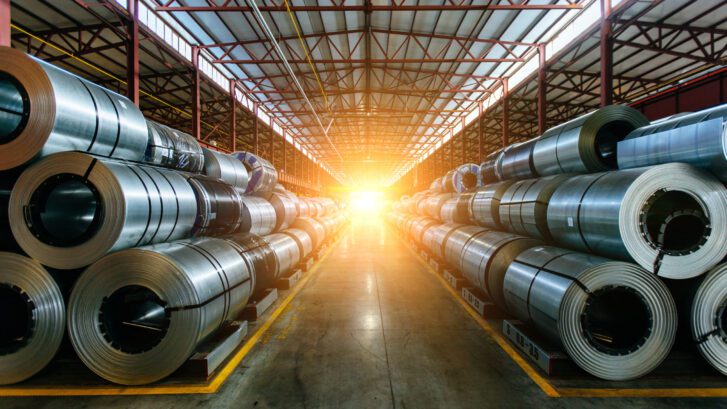
Efficient Steel Manufacturing Practices

Efficient Steel Manufacturing Practices

Efficient Steel Manufacturing Practices: Balancing Cost, Safety, and Sustainability

Steel remains one of the most important industrial materials in the world. It forms the backbone of infrastructure, transportation, construction, and heavy industry. However, steel manufacturing is also energy-intensive, capital-heavy, and subject to increasing environmental scrutiny. As a result, steel producers face a complex challenge: they must produce steel efficiently while maintaining high safety standards and reducing environmental impact.

Therefore, modern steel manufacturing increasingly focuses on efficient operational practices that balance cost, safety, and sustainability. Rather than optimising a single factor in isolation, successful steel plants integrate these priorities across their entire production chain.

This article explores the key strategies steel producers are adopting to improve manufacturing efficiency while ensuring safe operations and long-term sustainability.


Why efficiency matters in modern steel production

Efficiency has always been important in steel manufacturing. However, several new pressures have made it even more critical.

Rising energy and raw material costs

Firstly, steel production consumes large amounts of energy and raw materials. Electricity, natural gas, coke, iron ore, and scrap represent major operating costs. Consequently, even small improvements in efficiency can significantly reduce production expenses.

Increasing environmental expectations

Secondly, steel producers face growing pressure to reduce emissions and environmental impact. Governments, investors, and customers increasingly demand cleaner production processes. Therefore, efficiency improvements often go hand-in-hand with sustainability initiatives.

Competitive global markets

Finally, steel markets are highly competitive. Producers must continuously improve productivity and cost control to remain competitive against global suppliers. As a result, efficient manufacturing practices are essential for long-term viability.


Key stages of steel manufacturing

Before examining efficiency strategies, it is useful to understand the main stages of steel production.

Typical steelmaking processes include:

  • Raw material preparation

  • Ironmaking in blast furnaces or direct reduction plants

  • Steelmaking in basic oxygen or electric arc furnaces

  • Continuous casting

  • Rolling and finishing operations

Each stage presents opportunities for efficiency improvements.


Improving raw material efficiency

Efficient steel manufacturing begins with effective raw material management.

Optimising material quality and consistency

Firstly, consistent raw material quality improves process stability. Variations in ore grade, scrap composition, or additives can disrupt furnace performance and reduce yield.

Therefore, steel plants increasingly invest in:

  • Advanced material testing

  • Automated blending systems

  • Data-driven quality monitoring

As a result, furnaces operate more consistently and produce higher-quality steel.

Reducing material waste

Secondly, efficient material handling reduces losses throughout the plant. Spillage, dust generation, and handling errors can lead to significant waste over time.

Consequently, modern facilities use:

  • Enclosed conveyor systems

  • Dust suppression technologies

  • Automated material tracking systems

These measures help ensure that valuable raw materials are used effectively.


Energy efficiency in steel manufacturing

Energy consumption is one of the largest cost drivers in steel production. Therefore, improving energy efficiency delivers both economic and environmental benefits.

Waste heat recovery systems

Steelmaking processes generate substantial waste heat. Instead of allowing this heat to dissipate, plants increasingly capture it using waste heat recovery systems.

Recovered energy can be used to:

  • Generate electricity

  • Preheat combustion air

  • Support other plant processes

As a result, overall energy consumption decreases.

Optimising furnace operations

Furnace efficiency plays a critical role in steel production costs. By monitoring temperature profiles, oxygen levels, and fuel injection rates, operators can maintain optimal combustion conditions.

Consequently, fuel consumption decreases while productivity increases.

Electrification and renewable energy integration

Many steel plants are also exploring electrification strategies. Electric arc furnaces powered by renewable electricity can significantly reduce emissions compared with traditional blast furnace routes.

Therefore, energy efficiency increasingly aligns with sustainability goals.


Process optimisation and automation

Modern steel plants rely heavily on automation and advanced process control.

Real-time monitoring and analytics

Digital sensors and control systems now monitor critical parameters throughout the plant. These systems track:

  • Temperature and pressure

  • Chemical composition

  • Mechanical loads

  • Equipment performance

Consequently, operators receive immediate feedback and can adjust processes quickly.

Predictive maintenance and equipment reliability

Unplanned equipment failures disrupt production and increase costs. Therefore, many steel plants are implementing predictive maintenance strategies.

Using sensors and analytics, maintenance teams can identify early signs of wear or malfunction. As a result, repairs can be scheduled before failures occur.

Digital twins and process modelling

Digital twins allow steel producers to simulate production processes in virtual environments. By testing scenarios digitally, operators can optimise parameters without interrupting production.

Consequently, plants can identify efficiency improvements while reducing operational risk.


Enhancing safety in steel manufacturing

Safety remains a fundamental priority in steel production. Efficient operations must always support safe working conditions.

Reducing exposure to hazardous environments

Steel plants involve high temperatures, heavy equipment, and moving materials. Therefore, automation helps reduce direct worker exposure to hazardous areas.

Remote operation and monitoring systems allow operators to supervise processes from safer locations.

Improving operational procedures and training

Consistent procedures and effective training programs are essential for safe operations. Workers must understand both normal operating conditions and emergency response procedures.

Consequently, many steel plants invest in simulation-based training programs that allow workers to practice responses to unusual scenarios.

Integrating safety systems with production control

Modern control systems integrate safety monitoring directly into production processes. For example:

  • Overload protection systems prevent equipment damage

  • Temperature alarms prevent overheating

  • Interlocks prevent unsafe equipment operation

Therefore, safety becomes embedded within everyday operations.


Sustainability in steel manufacturing

Steel producers increasingly recognise that sustainability is essential for long-term industry viability.

Reducing greenhouse gas emissions

Steel production accounts for a significant share of global industrial emissions. Consequently, producers are investing in technologies that reduce carbon intensity.

These technologies include:

  • Hydrogen-based reduction processes

  • Electric arc furnaces using recycled scrap

  • Carbon capture and storage systems

Increasing recycling and circularity

Steel is highly recyclable, and scrap metal is an important raw material for electric arc furnaces. Increasing scrap utilisation reduces the need for primary ironmaking and lowers energy consumption.

Therefore, recycling plays a key role in sustainable steel production.

Efficient water management

Steel plants also require significant water resources for cooling and processing. Modern facilities implement water recycling systems to minimise consumption and environmental impact.


Balancing cost, safety, and sustainability

One of the most significant challenges in steel manufacturing is balancing competing priorities.

Cost pressures

Producers must maintain competitive pricing while investing in new technologies and environmental compliance.

Safety requirements

At the same time, safety cannot be compromised. Investments in training, automation, and protective systems are essential.

Sustainability commitments

Finally, sustainability initiatives require capital investment and long-term planning.

Therefore, successful steel producers adopt integrated strategies that address all three objectives simultaneously.


Future trends in efficient steel manufacturing

Looking ahead, several trends are likely to shape the future of steel production.

Increased digitalisation

Advanced analytics, artificial intelligence, and digital twins will continue to improve process optimisation and efficiency.

Greater use of hydrogen-based steelmaking

Hydrogen-based reduction technologies offer the potential to significantly reduce emissions from ironmaking processes.

Continued focus on circular economy principles

Steel recycling will become increasingly important as industries seek to reduce environmental impact.


Conclusion: building a resilient steel industry

Efficient steel manufacturing practices require careful balance. By improving process efficiency, enhancing safety systems, and investing in sustainable technologies, steel producers can create operations that are both economically viable and environmentally responsible.

Ultimately, the future of the steel industry depends on integrating cost control, operational safety, and sustainability into a unified manufacturing strategy. Plants that successfully adopt these practices will be better positioned to compete in an increasingly demanding global market.

Global Port Investment

Global Port Investment

Global Port Investment: Pilbara, South Australia, and Asia-Pacific Expansion Projects

Ports are the critical gateways of global trade. As commodity demand, container volumes, and bulk exports continue to rise, governments and private operators are investing heavily in port infrastructure. Across the Asia-Pacific region in particular, new terminals, expanded berths, and upgraded cargo handling systems are reshaping maritime logistics.

At the same time, Australia has emerged as a key focal point for port investment. Resource exports, energy transitions, and growing regional trade have driven major expansion projects in areas such as the Pilbara and South Australia. Consequently, port infrastructure is evolving to handle larger vessels, higher cargo volumes, and increasingly automated operations.

This article examines the drivers behind global port investment, highlights major expansion projects in Western Australia and South Australia, and explores how the Asia-Pacific region is positioning itself for future trade growth.


Why global port investment is accelerating

Port infrastructure historically evolves in cycles that mirror global economic growth. However, in recent years several factors have accelerated the pace of investment.

Growing demand for bulk commodities

Firstly, demand for bulk commodities continues to rise, particularly from Asia. Iron ore, lithium, copper, and other resources remain essential for infrastructure development and energy transition technologies.

As a result, export-focused ports must expand capacity to handle larger volumes. This expansion often involves:

  • New berths and wharf extensions

  • Larger ship loaders and stacker-reclaimers

  • Expanded rail and conveyor systems

Consequently, ports connected to mining regions are experiencing significant infrastructure upgrades.

Larger vessels and shipping efficiency

Secondly, shipping lines are increasingly deploying larger vessels to improve efficiency. Bulk carriers and container ships now exceed sizes that many older ports were originally designed to accommodate.

Therefore, ports must deepen channels, strengthen quay structures, and install higher-capacity cargo handling equipment. Without such upgrades, ports risk becoming bottlenecks in the global logistics chain.

Regional trade integration in the Asia-Pacific

Finally, trade within the Asia-Pacific region is expanding rapidly. New manufacturing hubs, energy supply chains, and mineral exports are strengthening economic connections between Australia, Southeast Asia, and East Asia.

Consequently, many governments view port expansion as a strategic investment in long-term economic competitiveness.


Pilbara: the engine of Australian bulk exports

The Pilbara region of Western Australia represents one of the world’s most significant bulk export hubs. Iron ore shipments from the Pilbara supply major steel producers across Asia, particularly in China, Japan, and South Korea.

Strategic importance of Pilbara ports

Ports in the Pilbara handle hundreds of millions of tonnes of iron ore each year. Therefore, maintaining efficient port operations is essential not only for Australia’s economy but also for global steel supply chains.

Major Pilbara ports include:

  • Port Hedland

  • Dampier

  • Cape Lambert

Each of these facilities supports large-scale mining operations operated by major resource companies.

Expansion projects and capacity upgrades

In order to meet growing demand, Pilbara ports continue to invest in expansion projects. These projects typically include:

  • Additional ship loading capacity

  • New conveyor corridors

  • Upgraded rail unloading systems

  • Expanded stockyard storage

Consequently, throughput capacity continues to increase while operational efficiency improves.

Automation and digital infrastructure

In addition to physical expansion, Pilbara ports are investing heavily in digital systems. Automated equipment, predictive maintenance platforms, and integrated logistics planning tools are becoming standard features.

As a result, port operations are becoming more reliable, safer, and better able to handle fluctuating export volumes.


South Australia: emerging export infrastructure

While Western Australia dominates bulk exports, South Australia is increasingly investing in port infrastructure to support emerging industries.

Supporting energy transition minerals

South Australia possesses significant deposits of minerals essential for renewable technologies, including copper and rare earth elements. Consequently, port upgrades are being planned to support growing export capacity.

These developments often include:

  • Bulk material handling facilities

  • Expanded loading infrastructure

  • Improved rail and road connectivity

Therefore, South Australia’s ports are evolving to support new resource supply chains.

Hydrogen and energy export potential

In addition to mineral exports, South Australia is positioning itself as a future exporter of hydrogen and renewable energy derivatives. Several port development proposals include infrastructure capable of handling new energy commodities.

As a result, port design increasingly considers flexibility and adaptability.

Modernising existing port assets

Rather than building entirely new facilities, many South Australian projects focus on modernising existing ports. Upgrades may involve:

  • Strengthening quay structures

  • Installing modern cargo handling systems

  • Expanding storage and logistics areas

Consequently, existing ports can support higher volumes without requiring entirely new locations.


Asia-Pacific port expansion trends

Beyond Australia, port investment across the Asia-Pacific region is accelerating rapidly.

Southeast Asian logistics growth

Countries such as Vietnam, Indonesia, and Malaysia are expanding their ports to support growing manufacturing and trade. These projects typically include:

  • Deepwater container terminals

  • Bulk commodity export facilities

  • Integrated logistics zones

As a result, Southeast Asia is becoming an increasingly important node in global supply chains.

Chinese port modernisation

China already operates many of the world’s largest ports. However, investment continues as operators upgrade infrastructure to improve efficiency and automation.

These upgrades often include:

  • Automated container terminals

  • Smart logistics platforms

  • High-capacity ship-to-shore cranes

Consequently, Chinese ports remain among the most technologically advanced in the world.

Regional connectivity initiatives

Infrastructure initiatives across Asia are improving connections between ports and inland transport networks. Rail corridors, highways, and inland terminals allow cargo to move more efficiently between production centres and coastal export hubs.

Therefore, port investment is increasingly linked to broader logistics development.


Technology and automation in new port investments

Modern port projects rarely focus solely on physical infrastructure. Instead, technology integration is a central component of expansion plans.

Automated cargo handling

New terminals increasingly deploy automated systems such as:

  • Automated stacking cranes

  • Remote-operated ship-to-shore cranes

  • Autonomous yard vehicles

These technologies improve safety while increasing operational consistency.

Digital port platforms

In addition to equipment automation, digital platforms help coordinate complex operations. These systems manage:

  • Vessel scheduling

  • Yard inventory

  • Truck and rail movements

Consequently, ports can optimise throughput while minimising congestion.

Predictive maintenance and reliability systems

Port operators also invest in predictive maintenance technologies to reduce downtime. Sensors and monitoring systems track equipment health and alert maintenance teams before failures occur.

As a result, asset availability improves and maintenance costs decrease.


Economic impacts of port expansion

Port investments generate benefits beyond the maritime sector.

Supporting regional employment

Construction projects create jobs in engineering, manufacturing, and logistics. Furthermore, expanded port operations generate ongoing employment opportunities.

Strengthening export competitiveness

Improved port capacity reduces congestion and shipping delays. Consequently, exporters can deliver commodities more efficiently and reliably.

Enabling new industries

In many cases, port infrastructure enables entirely new industries to develop. Energy exports, advanced manufacturing, and resource processing often depend on reliable maritime logistics.

Therefore, port investment has wide-ranging economic effects.


Environmental and regulatory considerations

Despite the benefits of expansion, port projects must address environmental concerns.

Coastal ecosystem protection

Port construction can affect marine ecosystems, including seabeds and coastal habitats. Therefore, environmental impact assessments and mitigation measures are essential.

Emissions reduction and electrification

Many ports are investing in electrification and energy-efficient equipment to reduce emissions. Shore power systems, electric cargo handling machines, and renewable energy integration are becoming more common.

Sustainable infrastructure design

Modern port developments increasingly incorporate sustainability principles, such as:

  • Reduced dredging requirements

  • Energy-efficient lighting and systems

  • Improved stormwater management

Consequently, ports can expand while reducing environmental impact.


Challenges facing global port investment

Despite strong momentum, port expansion projects face several challenges.

Supply chain constraints

Large infrastructure projects rely on global supply chains for equipment and materials. Delays in shipping or manufacturing can affect construction timelines.

Financing and cost escalation

Rising construction costs and interest rates can increase project budgets. Therefore, careful financial planning is essential.

Community and regulatory approvals

Port developments often require extensive consultation and approval processes. Balancing economic development with community concerns can take significant time.


Future outlook for Asia-Pacific port infrastructure

Looking ahead, port investment across the Asia-Pacific region is expected to remain strong.

Continued growth in bulk exports

Demand for minerals used in renewable energy technologies will likely increase. Consequently, ports connected to mining regions will continue expanding.

Greater automation and digitalisation

Automation technologies will play a larger role in future port operations. Remote operation, digital twins, and AI-assisted planning tools are likely to become standard features.

Stronger regional trade networks

As trade flows evolve, ports will increasingly operate as integrated logistics hubs rather than isolated terminals.


Conclusion: ports as the backbone of global trade

In conclusion, global port investment is accelerating as countries expand infrastructure to support growing trade volumes. Projects in the Pilbara and South Australia highlight Australia’s strategic role in resource exports, while Asia-Pacific expansion projects demonstrate the region’s importance in global supply chains.

Through a combination of infrastructure development, technology adoption, and regional cooperation, ports are positioning themselves for the next phase of global trade growth. Ultimately, modern port infrastructure will remain a cornerstone of economic development across the Asia-Pacific region.

IP Ratings Explained

IP Ratings Explained

IP Ratings Explained: Why Durability Matters in Harsh Port and Mining Environments

Ports and mining operations are, without question, among the harshest industrial environments on earth. In these settings, equipment operates continuously in salt-laden coastal air, abrasive dust, heavy rainfall, extreme heat, and constant vibration. Consequently, even minor weaknesses in enclosures, seals, and electrical protection can quickly lead to premature failure. Therefore, understanding IP ratings is not simply a technical exercise; rather, it is a strategic requirement for maintaining uptime, safety, and asset longevity.

In the sections that follow, we will first explain what IP ratings mean. Next, we will examine how they apply specifically to port and mining environments. Finally, we will explore why durability should always be considered a long-term investment rather than a short-term cost decision.


What are IP ratings?

To begin with, IP ratings, or Ingress Protection ratings, define how effectively an enclosure protects against solid objects and liquids. Importantly, this system is internationally recognised and therefore provides a standardised method of comparing durability across manufacturers.

An IP rating is typically written as IPXY, where the first digit represents protection against solid particles and the second digit represents protection against water. As a result, a rating such as IP66 or IP67 immediately communicates both dust and water resistance levels.

Therefore, when specifying equipment for ports or mines, the IP rating should never be overlooked, because it directly influences operational reliability.


The first digit: protection against solids

Firstly, the first digit in an IP rating refers to protection against solid particles, including dust. This scale runs from 0 to 6.

  • 0 indicates no protection.
  • 1 to 4 indicate increasing protection against larger solid objects.
  • 5 indicates dust-protected, meaning limited ingress may occur.
  • 6 indicates dust-tight, meaning no dust ingress.

In mining environments, dust is not merely cosmetic. Instead, it is abrasive, pervasive, and capable of infiltrating the smallest gaps. Consequently, equipment that is only partially protected may experience accelerated wear or internal contamination. Therefore, in most open-pit and underground operations, IP6X dust-tight protection should be considered the baseline requirement.

Similarly, in bulk handling areas of ports, fine particulate material from coal, grain, or ore can accumulate rapidly. As a result, dust ingress can compromise sensors, encoders, and control components if insufficiently protected.


The second digit: protection against water

Secondly, the second digit defines protection against water exposure. This scale typically ranges from 0 to 9.

Key industrial levels include:

  • 4 for protection against splashing water
  • 5 for protection against water jets
  • 6 for protection against powerful water jets
  • 7 for protection against temporary immersion
  • 8 for protection against continuous immersion

In coastal port environments, wind-driven rain and salt spray create aggressive moisture exposure. Therefore, equipment installed on ship-to-shore cranes, gantries, and exposed masts must withstand more than light splashing. Consequently, IP66 or higher is frequently specified.

In mining, water exposure may result from heavy rainfall, washdown procedures, or slurry environments. Accordingly, selecting equipment rated only for basic splash protection may lead to moisture ingress and electrical faults.


Why IP ratings matter in ports

Ports present a unique combination of mechanical, environmental, and operational stressors. Therefore, durability directly affects productivity and safety.

Salt corrosion and moisture

Firstly, salt-laden air accelerates corrosion. As a result, poorly sealed enclosures allow moisture intrusion, which then corrodes contacts and damages circuit boards. Consequently, downtime increases and maintenance costs rise.

Therefore, specifying higher IP-rated enclosures, combined with corrosion-resistant materials, significantly reduces long-term failure risk.

Wind-driven rain and extreme weather

In addition, ports frequently experience strong winds. When rain is driven horizontally rather than vertically, weaker seals are exposed. Consequently, equipment that performs adequately in sheltered installations may fail when mounted high on cranes.

For this reason, higher ingress protection ratings are essential for exposed installations.

High-pressure washdown

Furthermore, routine maintenance often includes high-pressure washdown. Although this improves cleanliness, it simultaneously increases water ingress risk. Therefore, enclosures must be rated to withstand powerful water jets without seal degradation.


Why IP ratings are critical in mining environments

Mining operations differ from ports; however, they are equally demanding.

Persistent dust exposure

Firstly, mining dust is continuous rather than occasional. Consequently, seals experience constant exposure. If equipment is not fully dust-tight, internal contamination becomes inevitable over time. Therefore, IP6X protection is typically non-negotiable in mining.

Temperature extremes and thermal cycling

In addition, mines often experience significant temperature fluctuations. As materials expand and contract, seals may degrade. Consequently, ingress protection must account not only for dust and water but also for long-term environmental stress.

Vibration and mechanical stress

Moreover, heavy machinery produces sustained vibration. While IP ratings measure ingress protection, they do not directly account for vibration. Nevertheless, vibration can weaken seals and compromise protection levels. Therefore, robust mechanical design must complement high IP ratings.


Comparing common IP ratings in heavy industry

To clarify further, let us compare several commonly specified ratings.

IP65

IP65 provides dust-tight sealing and protection against water jets. Therefore, it is suitable for many sheltered outdoor installations. However, in highly exposed marine environments, it may not be sufficient.

IP66

IP66 provides dust-tight sealing and protection against powerful water jets. Consequently, it is widely used for exposed crane components and outdoor mining equipment.

IP67

IP67 adds protection against temporary immersion. Therefore, it is appropriate where equipment may encounter pooling water or flooding conditions.

IP68

IP68 provides continuous immersion protection. Although less common for standard crane or conveyor equipment, it is relevant for specialised applications.


IP ratings and critical industrial components

Sensors and encoders

Position sensors and encoders are often installed in exposed locations. Consequently, insufficient ingress protection can result in signal failure. Therefore, selecting high-IP-rated sensing equipment is essential for safe motion control.

Braking systems and actuators

Similarly, braking components must maintain performance under harsh conditions. If moisture or dust compromises friction surfaces or actuators, safety margins decline. Therefore, ingress protection directly influences braking reliability.

Electrical cabinets and control panels

Control cabinets house sensitive electronics. Even minimal moisture ingress can cause short circuits or corrosion. Consequently, enclosure sealing and cable gland integrity must align with specified IP ratings.


The limitations of IP ratings

Although IP ratings are important, they are not comprehensive indicators of durability.

Firstly, IP ratings do not measure corrosion resistance. Therefore, material selection remains critical in marine environments.

Secondly, IP ratings do not measure impact resistance. Instead, impact protection is addressed under separate IK ratings.

Thirdly, installation quality significantly affects real-world performance. Even the highest IP-rated enclosure will fail if seals are damaged or glands are improperly installed.


Cost versus lifecycle value

Higher IP-rated equipment often carries a higher upfront cost. However, when evaluated over the lifecycle, the economics frequently favour durability. Consequently, reduced downtime, lower maintenance frequency, and improved reliability offset initial expense.

Therefore, total cost of ownership should guide specification decisions rather than initial purchase price alone.


Future trends in industrial durability

Looking ahead, durability expectations continue to increase. As ports and mines deploy more sensors and digital systems, exposure points multiply. Consequently, ingress protection becomes even more critical.

Moreover, smart enclosures now incorporate humidity monitoring and seal integrity sensors. As a result, ingress protection is evolving from passive sealing to active condition monitoring.


Conclusion

In conclusion, IP ratings provide a clear and standardised method of evaluating protection against dust and water ingress. However, in harsh port and mining environments, they represent more than a specification detail. Rather, they form a foundational element of durability strategy.

By carefully selecting appropriate IP ratings, combining them with robust materials and proper installation practices, and considering lifecycle cost implications, operators can significantly enhance reliability and safety. Ultimately, durability is not simply about surviving harsh conditions; instead, it is about ensuring sustained performance, protecting assets, and maintaining operational continuity over the long term.